Hot Drink Vending Machines in Winter
How to recognize and enjoy hot canned and bottled drinks during a cold-weather Japan trip.
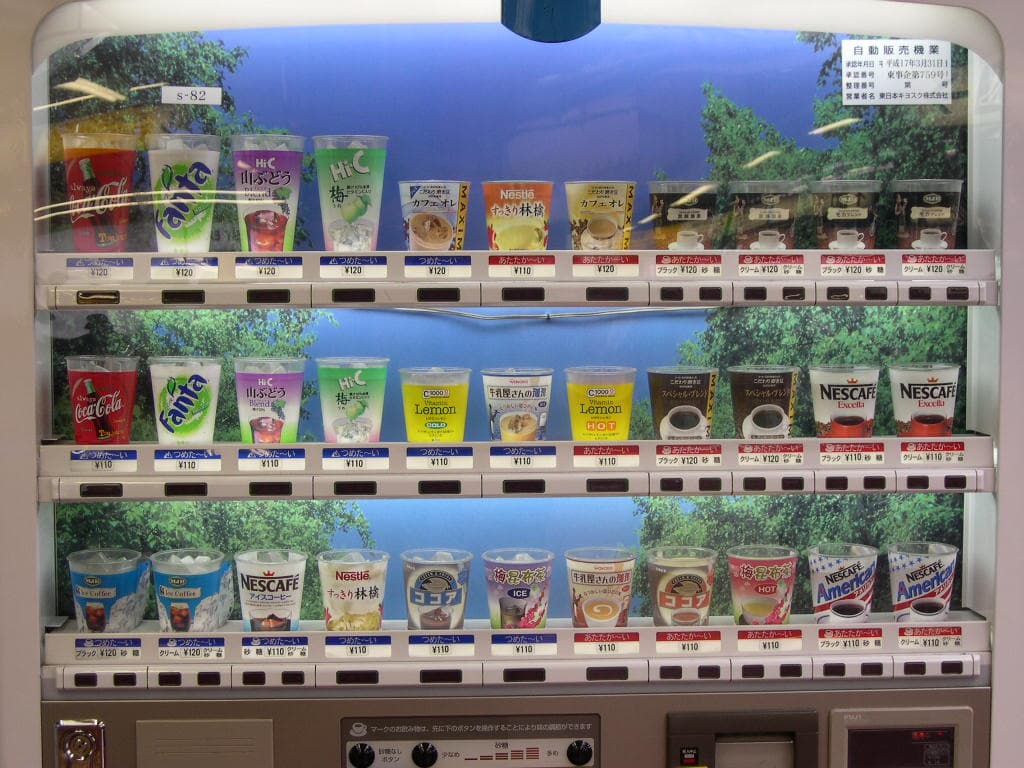
Japanese drink machines can sell hot and cold products side by side, making them especially useful on a winter route. Temperature is a live product attribute: read the label beside the button rather than assuming that every can of coffee or tea is warm.
What you will actually find
Hot selections commonly include canned or bottled coffee, green tea, milk tea and other seasonal drinks. Red or orange labels often indicate hot products, while blue commonly indicates cold. Similar package designs can appear in both sections, and the range changes with operator, region and season.
Practical advice
Check whether coffee is black, sweetened or milk-based and whether a tea contains sugar or caffeine. Hold the container carefully when it drops; metal cans can feel hotter than expected. Secure the cap or opening before walking through a station crowd and avoid placing a hot bottle directly against a phone or cold-sensitive item in your bag.
How to identify a hot selection
Look for a red or orange temperature strip and Japanese wording such as あたたかい or HOT. Confirm it beside the exact product button. The machine’s illuminated sample, package color or the outdoor temperature alone does not prove the drink is warm.
Useful winter categories
Black coffee is simple but caffeinated; milk coffee and milk tea may contain dairy and sugar. Unsweetened tea can be easier to identify only after translating the label. Soup-style drinks may contain corn, dairy, wheat or other ingredients and should be treated as food-label decisions, not ordinary water.
Where winter handling matters
On snowy or icy streets, finish payment before putting gloves back on and do not balance an open drink while walking. In stations, move away from boarding lines. In rural areas, do not rely on the next machine being stocked or warm; carry water and plan stops before a long route.
Winter purchase checklist
- Confirm the exact hot label beside the product.
- Translate sugar, milk and caffeine information when relevant.
- Hold the container carefully after collection.
- Move out of the passenger or pedestrian flow before opening it.
- Use the appropriate recycling point or carry the empty container.
Continue planning
What not to assume
The documentary photo records a genuine hot-and-cold machine format, not today’s exact lineup, temperature or price. Seasonal changeovers and sold-out items are normal.
Sources and verification
Research status: reviewed July 13, 2026. Prices, products and installations can change; the live machine and operator are authoritative.
Continue planning your Japan trip
Build a complete Hokkaido itinerary
Use this vending-culture stop as part of a fuller trip. Our in-depth Hokkaido guide includes a realistic regional route, seasonal advice, transport planning, local food picks, official sources and licensed photography.
Help improve this field guide
Seen a machine we should verify?
Share a dated observation, current products, price, map pin or correction. The editorial team reviews evidence before updating the public database.
About the author
Japan Vending Guide Editorial Team
Our English-language editorial team documents Japan’s vending culture using cautious sourcing and location verification. Unverified details remain clearly marked.
Read our editorial policy →