Why Japan Has So Many Vending Machines
Population patterns, convenience, trust and infrastructure all help explain Japan’s remarkable vending landscape.
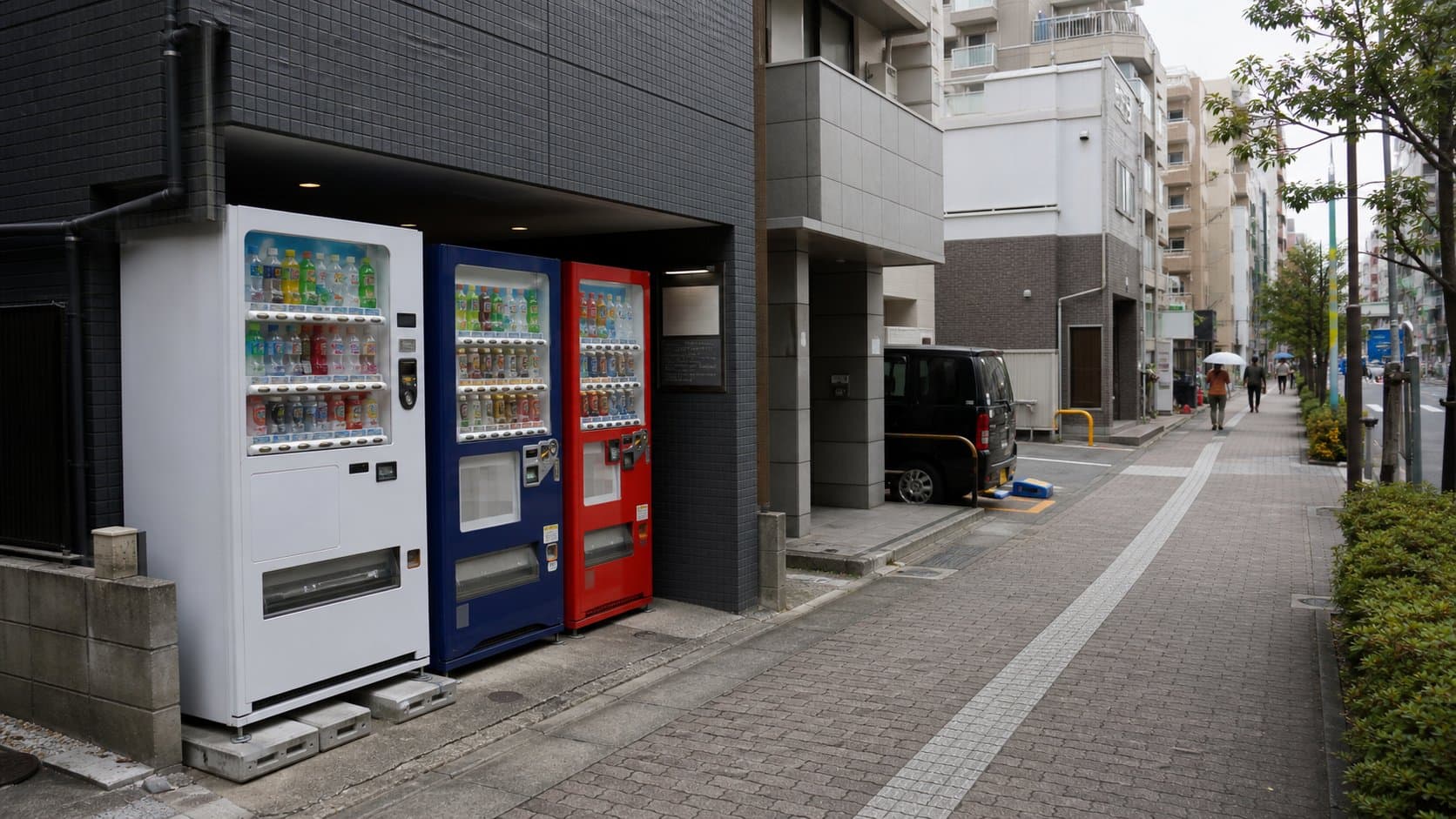
Japan’s vending landscape is the result of many ordinary business decisions, not one simple national trait. Machines survive where enough people want a quick purchase, the site can be serviced efficiently and the revenue covers electricity, rent, maintenance and replenishment.
What you will actually find
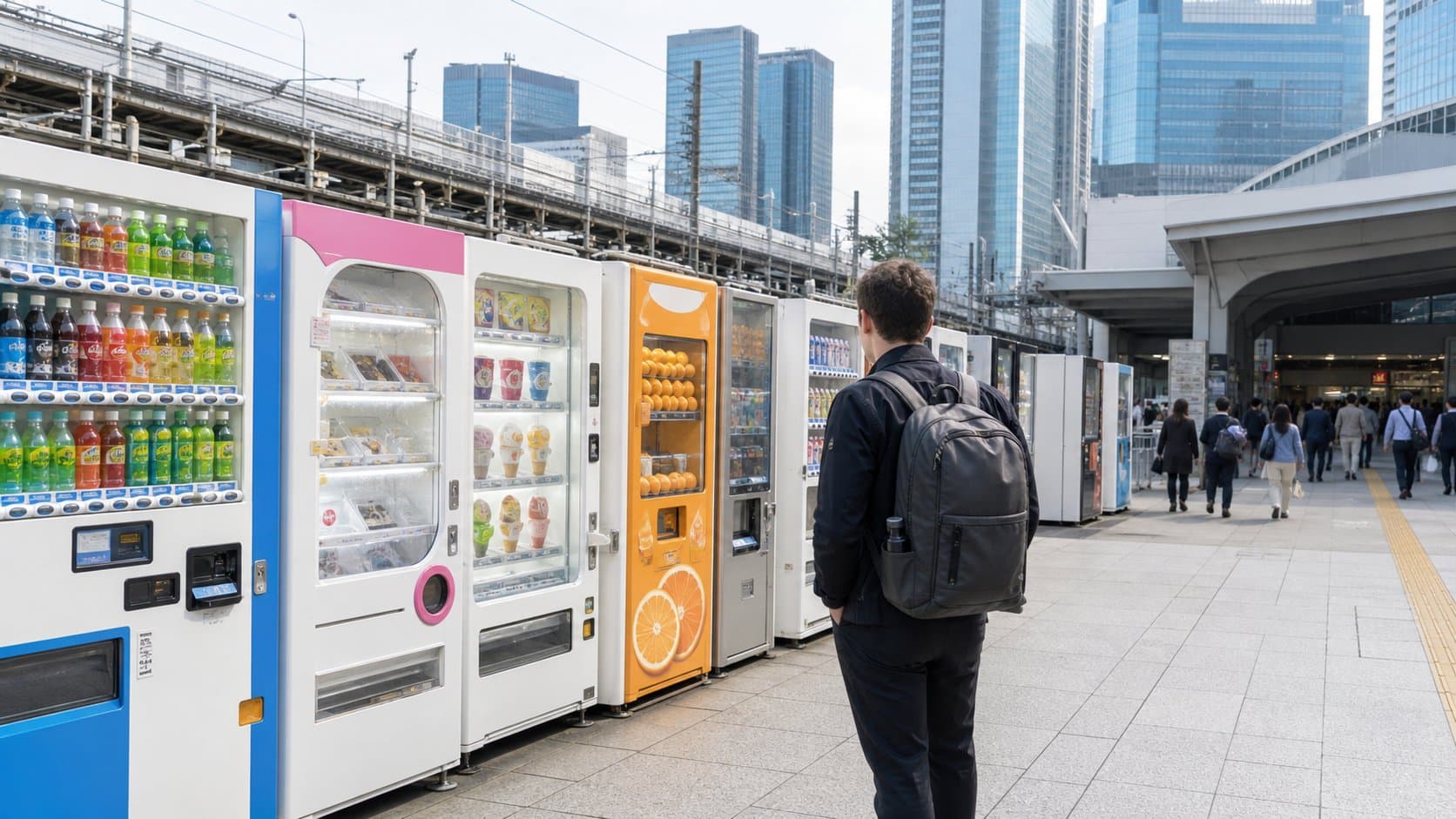
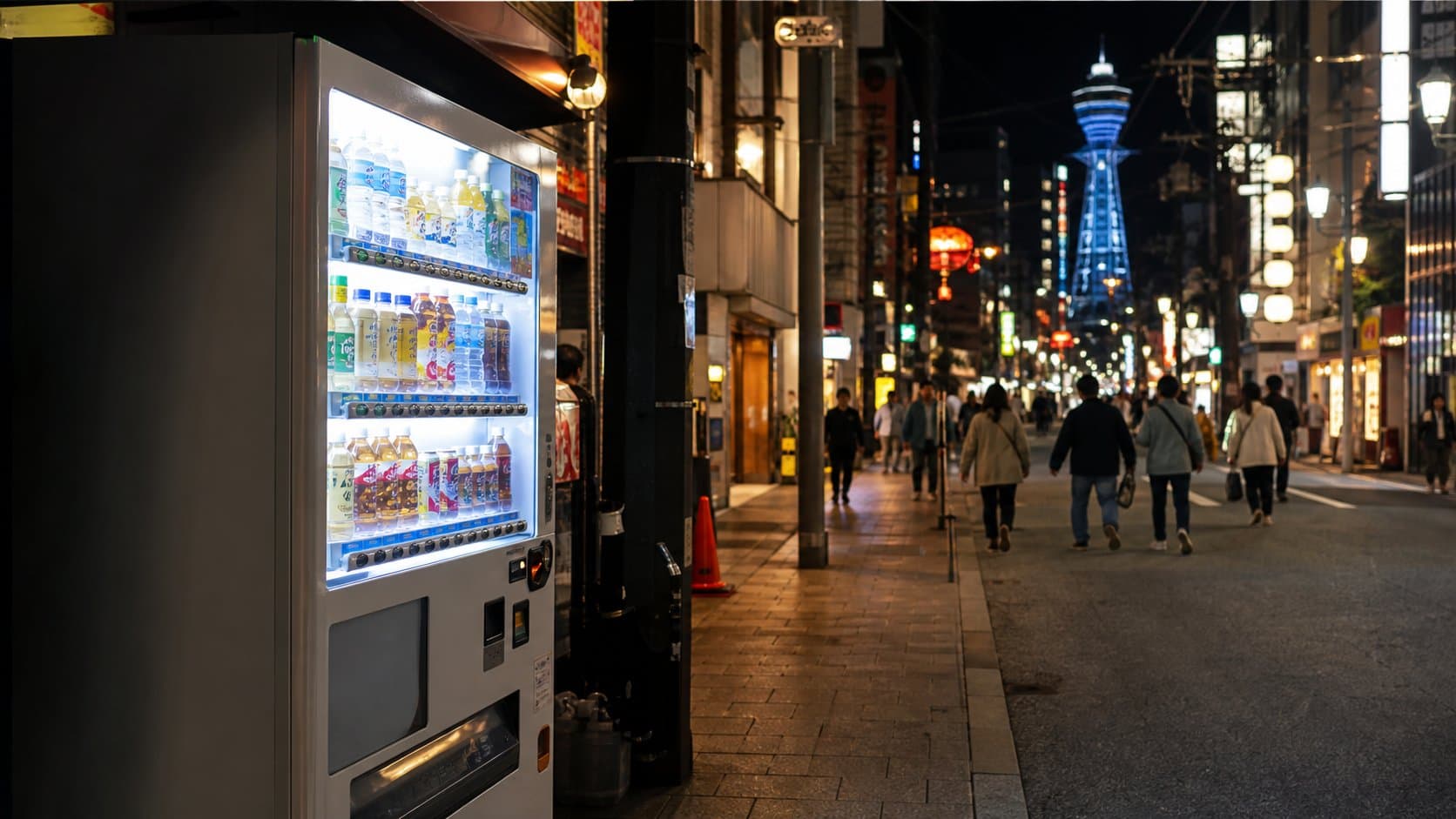
Drink machines work especially well on station approaches, in offices and hospitals, beside parking areas and on routes where a staffed shop would be impractical. They occupy little selling space, operate without a cashier and can offer hot and cold products from the same cabinet. An established network of beverage companies, route operators, payment equipment and maintenance services makes those small retail points practical at scale.
Practical advice
For travelers, density is uneven. Central Tokyo may have several machines within a short walk, while a rural route may have long gaps. Treat a machine as retail infrastructure, not a guaranteed tourist attraction. Carry water before remote walks, and use the live product panel rather than an old photo to judge stock, price and payment support.
What the official numbers actually say
A November 2022 analysis from Japan’s Ministry of Economy, Trade and Industry reported about 2.7 million vending machines at the end of 2021. More than 80 percent were beverage machines. A separate Japan Soft Drink Association page reported 1.994 million soft-drink machines at the end of 2022. The figures are not contradictory: one covers a wider range of machines and the other is limited to soft drinks. Any ‘one machine per X people’ claim is only meaningful when its year, population figure and machine definition are stated.
Convenience is demand, not decoration
A machine can turn a narrow piece of publicly accessible space into a small retail point. It is useful when customers value speed more than a large selection: one bottle before a train, coffee during a short break or water after nearby shops close. The machine does not eliminate labor; stocking, cleaning, cash collection, repairs and product planning still happen behind the scenes. It moves that work away from the moment of purchase.
Why trust is only part of the answer
Lower damage and theft risk can make outdoor operation easier, but ‘Japan has many machines because it is safe’ is too simple. Site traffic, commission or rent, power supply, delivery access, seasonal demand and competition from convenience stores all affect whether a location works. Industry guidance also covers anchoring, hygiene, operator identification, energy efficiency and recycling, showing that the system depends on management standards as well as public behavior.
The market is mature, not endlessly expanding
METI’s 2022 review described the installed base as saturated and noted that beverage-machine numbers had been declining, even while food machines and machines for tickets or admission showed different trends. That distinction matters: a highly visible network can still shrink or change format. New frozen-food, toy and cashless machines do not prove that every older drink machine remains profitable.
How to read vending-machine statistics
- Check the publication date and the end date of the data.
- Confirm whether the total includes drinks, food, tobacco, tickets and other categories.
- Separate installed machines from annual production or shipment figures.
- Do not reuse a population ratio without recalculating it for the same year.
- Prefer a government or industry source over an undated viral graphic.
What not to assume
Machine-count claims change by year and definition. We label historical statistics with their dates and do not present the 2021 or 2022 figures as a live 2026 total.
Sources and verification
- METI analysis of vending-machine statistics (November 2022)
- Japan Soft Drink Association machine-count FAQ
- Japan Soft Drink Association vending-machine guidelines
- Japan Vending System Manufacturers Association
Research status: reviewed July 13, 2026. Prices, products and installations can change; the live machine and operator are authoritative.
Practical questions
Frequently asked questions
Why are vending machines so common in Japan?+
They provide quick retail service in places where a staffed shop would be inefficient, including station approaches, offices, hospitals, parking areas and roadside sites. Dense pedestrian routes, mature restocking networks and reliable payment hardware also make many locations commercially practical.
Is low crime the main reason Japan has many vending machines?+
Low vandalism risk can help operators, but it is not a complete explanation. Product demand, site rent, electricity, maintenance, restocking routes, cashless systems and the economics of each location all affect whether a machine remains viable.
How many vending machines are there in Japan?+
The answer depends on the year and which machine types are counted. A 2022 METI analysis reported about 2.7 million machines at the end of 2021, while the Japan Soft Drink Association separately reported 1.994 million soft-drink machines at the end of 2022. These dated figures should not be presented as a live total.
Are vending machines equally common throughout Japan?+
No. Central transport and commercial districts can have dense clusters, while rural routes may have long gaps. Travelers should not rely on finding a machine for water or food without checking their route in advance.
Help improve this field guide
Seen a machine we should verify?
Share a dated observation, current products, price, map pin or correction. The editorial team reviews evidence before updating the public database.
About the author
Japan Vending Guide Editorial Team
Our English-language editorial team documents Japan’s vending culture using cautious sourcing and location verification. Unverified details remain clearly marked.
Read our editorial policy →