What Japanese Coins and Bills Do Vending Machines Accept?
A traveler-friendly guide to common cash denominations, the ¥1,000-note fallback and why legal tender may still be rejected by a machine.
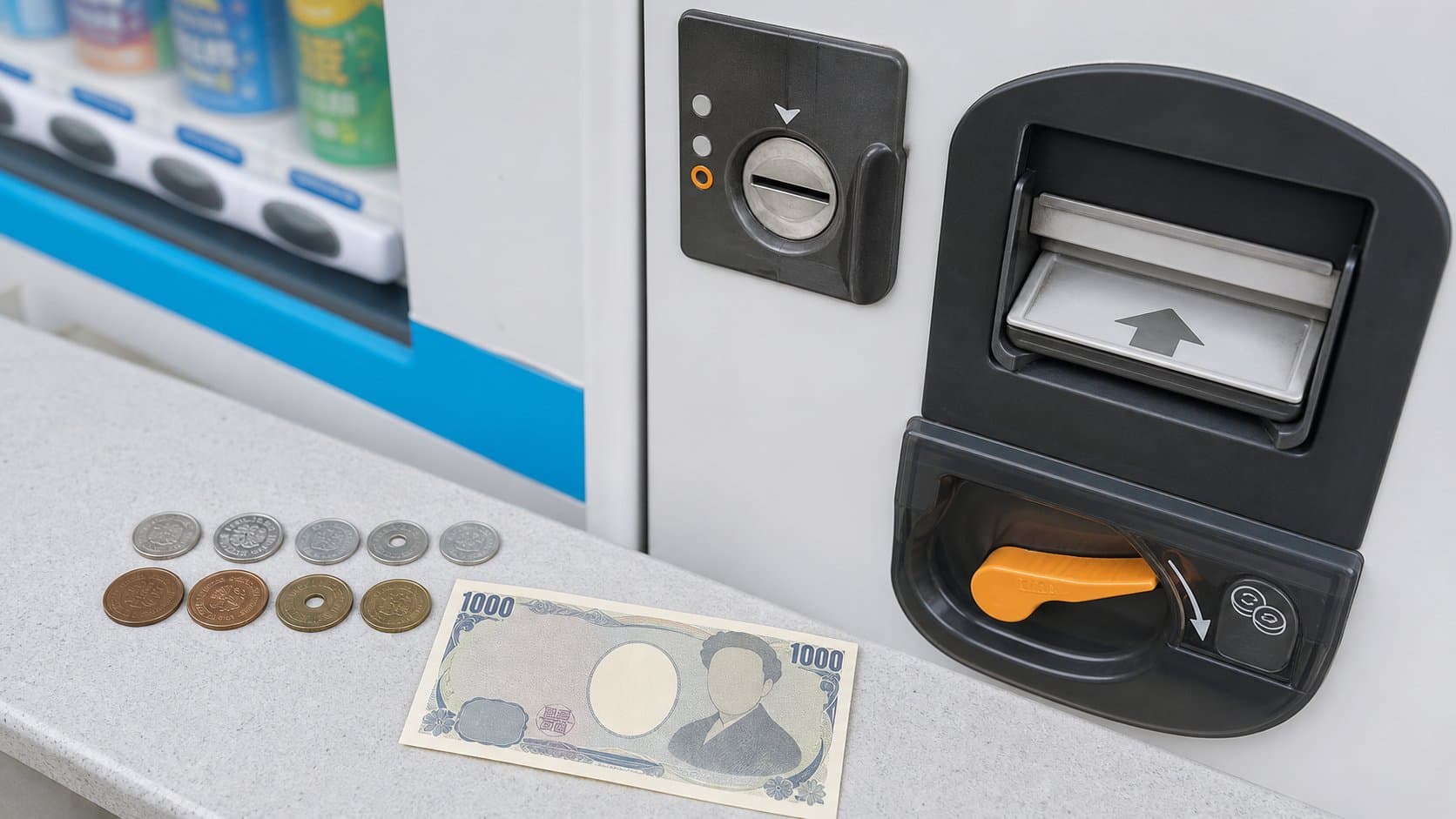
Japan currently issues ¥1, ¥5, ¥10, ¥50, ¥100 and ¥500 coins, plus ¥1,000, ¥2,000, ¥5,000 and ¥10,000 banknotes. That does not mean a vending machine must accept every valid denomination.
What you will actually find
For an ordinary drink purchase, the accepted-cash diagram beside the slots is the authority. Many machines are designed around the coins and low-value note most useful for a small purchase, while older hardware may reject a newer coin or note even though it is legal tender.
Practical advice
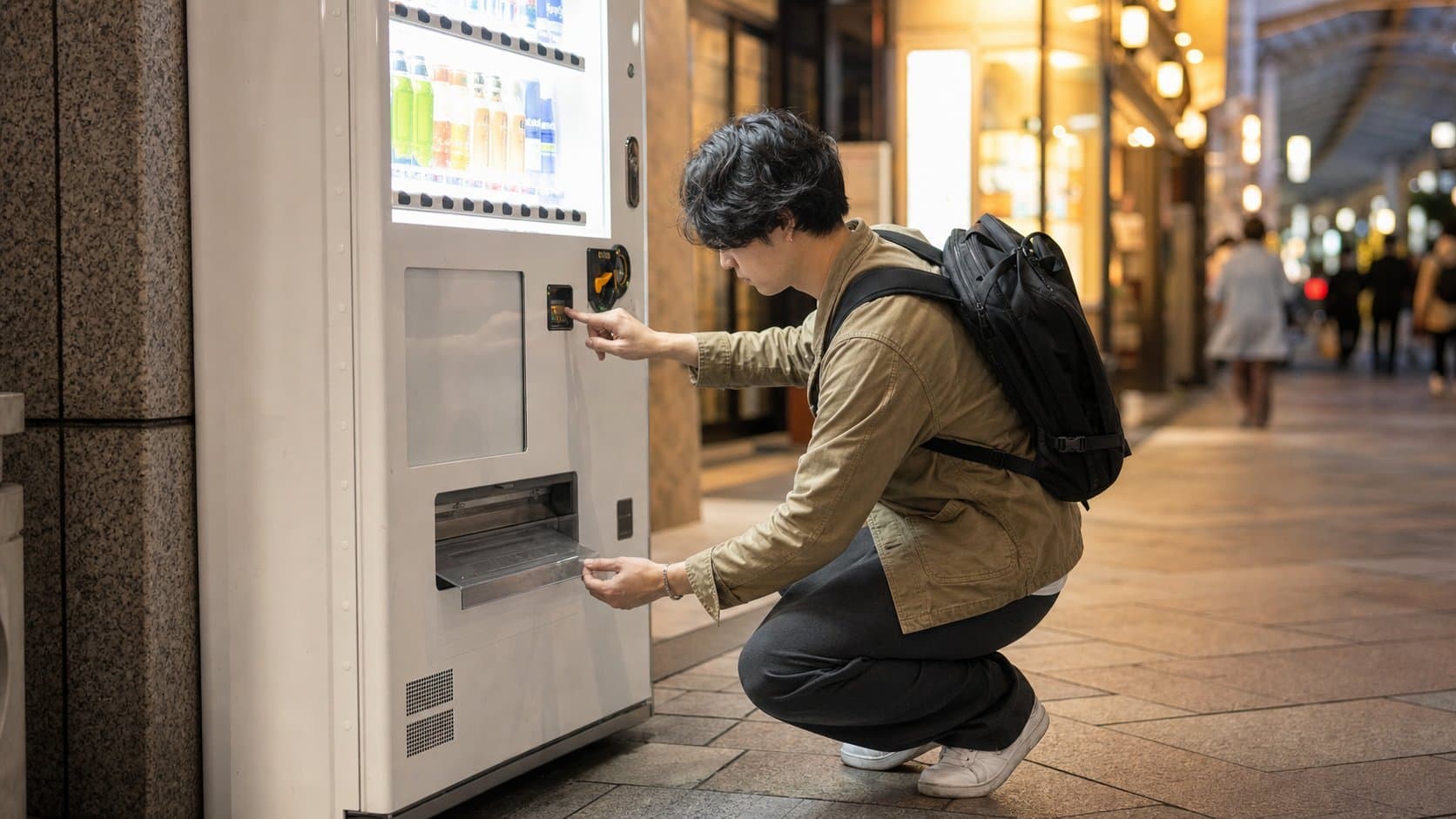
Carry several ¥10, ¥50 and ¥100 coins and a clean ¥1,000 note. Check the printed denomination icons before inserting anything. Flatten folded notes and insert only one at a time; use a convenience store or station counter to break a large note when necessary.
The current ¥1,000 note
Japan's current banknote series was first issued on July 3, 2024. The ¥1,000 note carries Kitasato Shibasaburo on the front and Hokusai's Great Wave on the back. Older valid ¥1,000 notes can still circulate, but machine acceptance depends on the installed validator and its updates rather than the note being legally valid.
The current ¥500 coin
The Bank of Japan lists the bicolor clad ¥500 coin first issued in 2021. Older machines were not all designed for that construction, so travelers should check the coin symbols on the cabinet. A rejected ¥500 coin should be retrieved and replaced with supported smaller coins or another payment method; never force it into the slot.
Valid does not mean useful for one purchase
The ¥1 and ¥5 coins are official currency but are rarely helpful for a typical drink-machine price, while ¥2,000, ¥5,000 and ¥10,000 notes are poor assumptions for a small vending transaction. Commemorative coins and foreign coins require separate handling. Use the machine's denomination diagram, not a general currency list, as the final instruction. If an older but valid note is rejected, a staffed convenience store or station counter is a better place to ask about exchanging it after making a normal purchase; the vending cabinet cannot explain why its validator refused the note.
Cash checklist
- Read the accepted-denomination icons beside the slot.
- Use smaller cash close to the displayed price.
- Insert coins or one flat note without forcing it.
- Press the illuminated product button.
- Collect both the item and any returned change.
Continue planning
What not to assume
Do not infer machine acceptance solely from a currency being valid. Damaged, wet, heavily folded, commemorative, newly designed or foreign money may be rejected by the validator.
Sources and verification
Research status: reviewed July 13, 2026. Prices, products and installations can change; the live machine and operator are authoritative.
Continue planning your Japan trip
Build a complete Tokyo itinerary
Use this vending-culture stop as part of a fuller trip. Our in-depth Tokyo guide includes a realistic regional route, seasonal advice, transport planning, local food picks, official sources and licensed photography.
Help improve this field guide
Seen a machine we should verify?
Share a dated observation, current products, price, map pin or correction. The editorial team reviews evidence before updating the public database.
About the author
Japan Vending Guide Editorial Team
Our English-language editorial team documents Japan’s vending culture using cautious sourcing and location verification. Unverified details remain clearly marked.
Read our editorial policy →