Weird Vending Machines in Japan You Need to See
A field guide to the unusual machines that turn an everyday purchase into a distinctly Japanese travel memory.
Japan’s unusual vending machines are useful to travelers only when you can tell what is documented, where it was seen and whether it is still worth making the trip. The historical examples below are real, but not every original machine has a verified current address. We label that uncertainty rather than inventing a map pin.
Location status at a glance
Photographed in Japan in 2021. The source does not identify a current public address.
Photographed in Asakusa in 2018. The exact installation has not been reconfirmed.
A historical 2008 example, not presented as a current destination.
The operator maintains a current prefecture-by-prefecture installation directory.
Where you can actually go now
These are the most useful current leads we could verify. The first is a real vending-machine network. The second is a staffed specialist shop—not a vending machine—but it is a reliable alternative for travelers specifically interested in insect food.
Dashi Doraku vending machines
The manufacturer’s official directory lists installations by prefecture, including Tokyo, Osaka, Kyoto, Fukuoka and Okinawa. Use that live directory because machines can be added or removed.
Open the official location directoryTAKEO Asakusa Main Store
A staffed insect-food shop and café at 2F, 1-3-14 Nishi Asakusa, Taito-ku. It is about three minutes from Tawaramachi Station. This is a dependable place to learn what you are buying and ask about allergens.
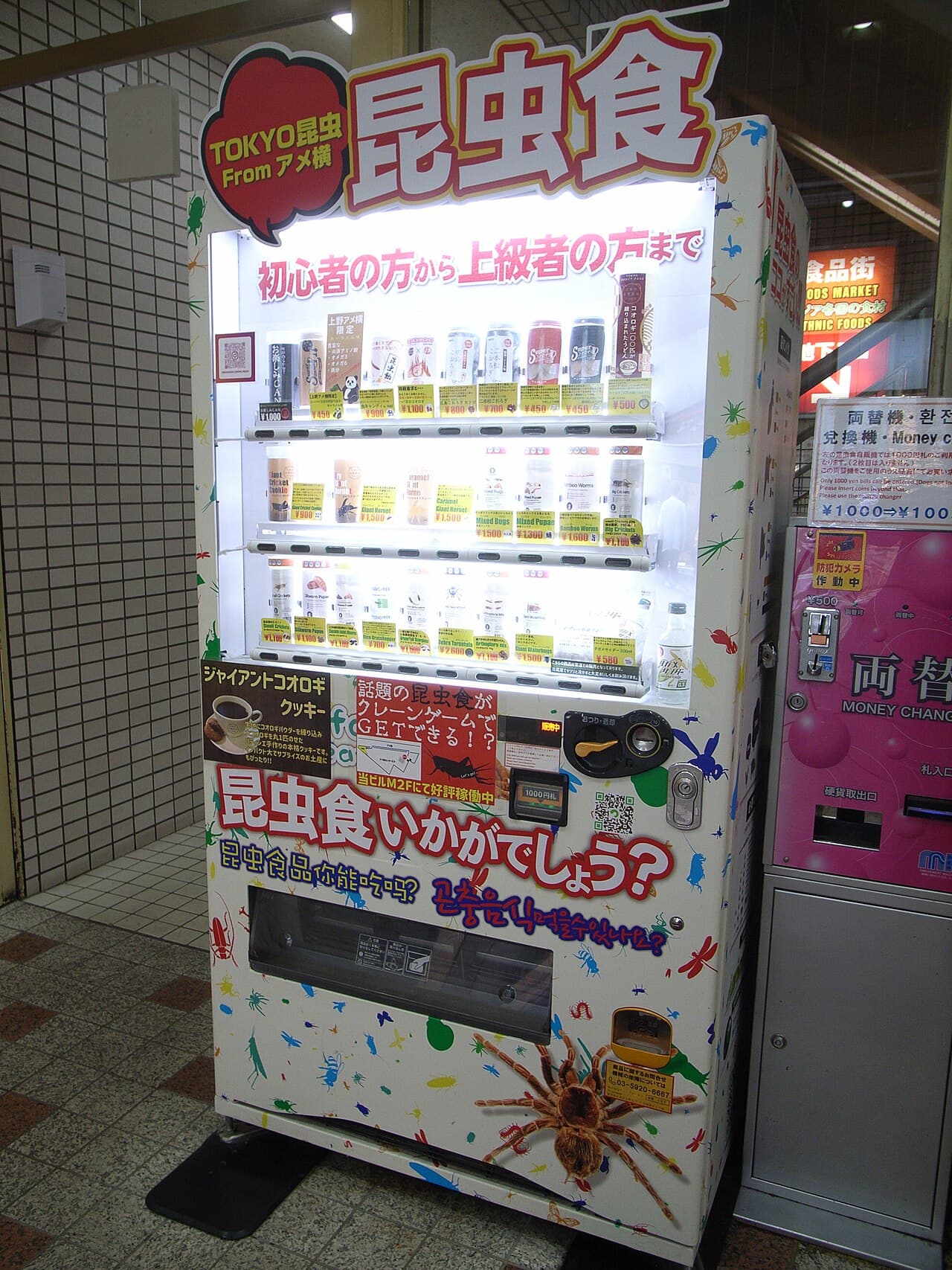
1. Canned insect food
The machine pictured above offered canned insect foods. The photograph documents it in March 2021, but supplies no current shop name or address. For a dependable present-day visit, use the TAKEO Asakusa alternative above; do not travel to an unverified social-media pin expecting the pictured machine.
What may be sold: packaged or canned edible insects. Read the ingredient and allergen label before buying. Travelers with shellfish allergies should be especially cautious because insects can contain similar allergenic proteins.
What to expect: a shelf-stable novelty or souvenir rather than a full meal. Range and price depend on the operator.
2. Regional retort curry packs
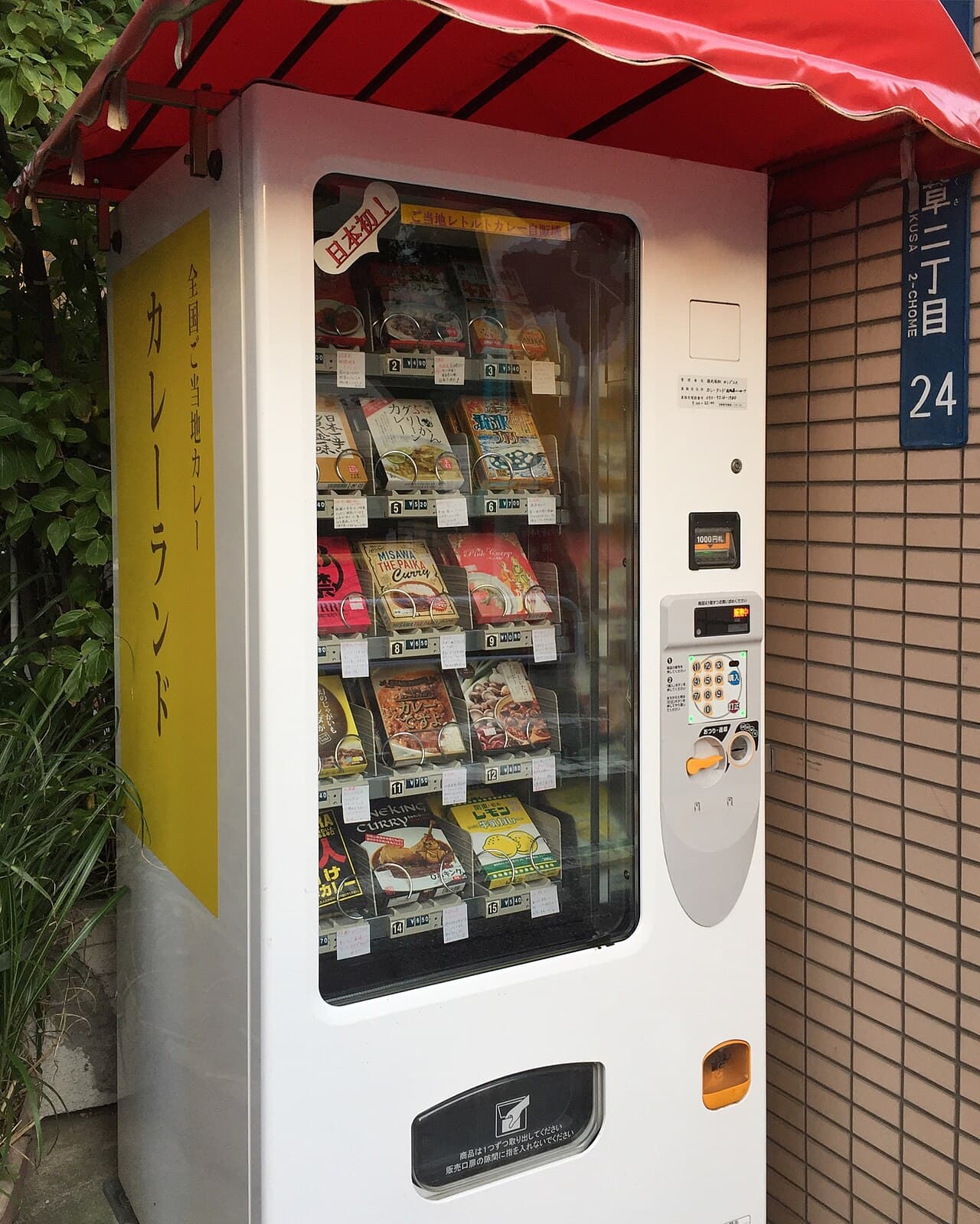
This documented Asakusa machine sold Japanese regional curries in sealed retort pouches. Unlike a hot-meal dispenser, it supplied packaged curry intended to be heated later and served with rice. The regional selection makes the format interesting as a food souvenir.
How to use it: note the best-before date and follow the heating directions. Never microwave a foil retort pouch unless its label explicitly says it is microwave-safe.
Verification note: the photo is from 2018. We have not confirmed that this exact installation remains available in 2026.
3. Ramen in a can
A documented 2008 photograph shows canned ramen products in a vending machine. These were prepared foods in cans—not restaurant meal-ticket machines and not newer frozen-ramen machines that sell take-home kits.
The evidence is historical, so visitors should not plan a journey around the same machine. Canned ramen is ready-to-eat or heat-and-eat; frozen ramen generally requires cooking facilities.
4. Bottled dashi stock
Dashi Doraku is known for machines selling bottles of concentrated Japanese soup stock rather than drinks. A bottle may contain a visible grilled flying fish, called ago in parts of Japan.
This is a cooking ingredient, not a beverage. Dilute or use it according to the bottle directions. Unlike the historical examples above, the operator publishes a current installation directory, linked in the location card. Select the prefecture you will visit and then open the operator’s map link shortly before your trip.
How to check a viral claim
- Look for the operator name.
- Check the photograph date.
- Confirm whether the product is hot, chilled, frozen or shelf-stable.
- Do not assume a viral machine is permanent.
- Check allergens and preparation instructions.
Sources and photo records
- Canned insect-food machine (2021)
- Regional curry machine in Asakusa (2018)
- Ramen-can machine (2008)
- Dashi Doraku official vending-machine directory
- TAKEO Asakusa official English guide
Research status: reviewed July 13, 2026. Historical photographs document the format at that time; only the explicitly linked current destinations should be used for trip planning.
Practical questions
Frequently asked questions
Where can I find weird vending machines in Japan?+
Start with current operator directories and verified venue pages rather than old viral lists. Dashi Doraku publishes a live machine directory, while specialist food, capsule-toy and airport operators publish location pages. Confirm the address again shortly before traveling.
Are the famous insect and ramen-can vending machines still operating?+
Some widely shared photographs document real machines from earlier years but do not prove that the same installation remains today. If a current operator page or recent field report cannot confirm the location, treat the image as historical evidence rather than a destination.
Can I eat food from an unusual vending machine immediately?+
Only when the package says it is ready to eat. Frozen ramen, curry and other meal kits may require refrigeration, heating or cooking. Check the storage instructions, allergens, best-before date and preparation method before paying.
How do I verify a vending-machine location?+
Check the operator name, official location page, observation date and public access conditions. Compare the address with Google Maps, then inspect the live machine for products, prices and payment methods because those details change faster than location pages.
Continue planning your Japan trip
Build a complete Tokyo itinerary
Use this vending-culture stop as part of a fuller trip. Our in-depth Tokyo guide includes a realistic regional route, seasonal advice, transport planning, local food picks, official sources and licensed photography.
Help improve this field guide
Seen a machine we should verify?
Share a dated observation, current products, price, map pin or correction. The editorial team reviews evidence before updating the public database.
About the author
Japan Vending Guide Editorial Team
Our English-language editorial team documents Japan’s vending culture using cautious sourcing and location verification. Unverified details remain clearly marked.
Read our editorial policy →