Cash or IC Card: How to Pay at Vending Machines
Compare cash and contactless IC payments, plus fallback options when a machine is cash-only.
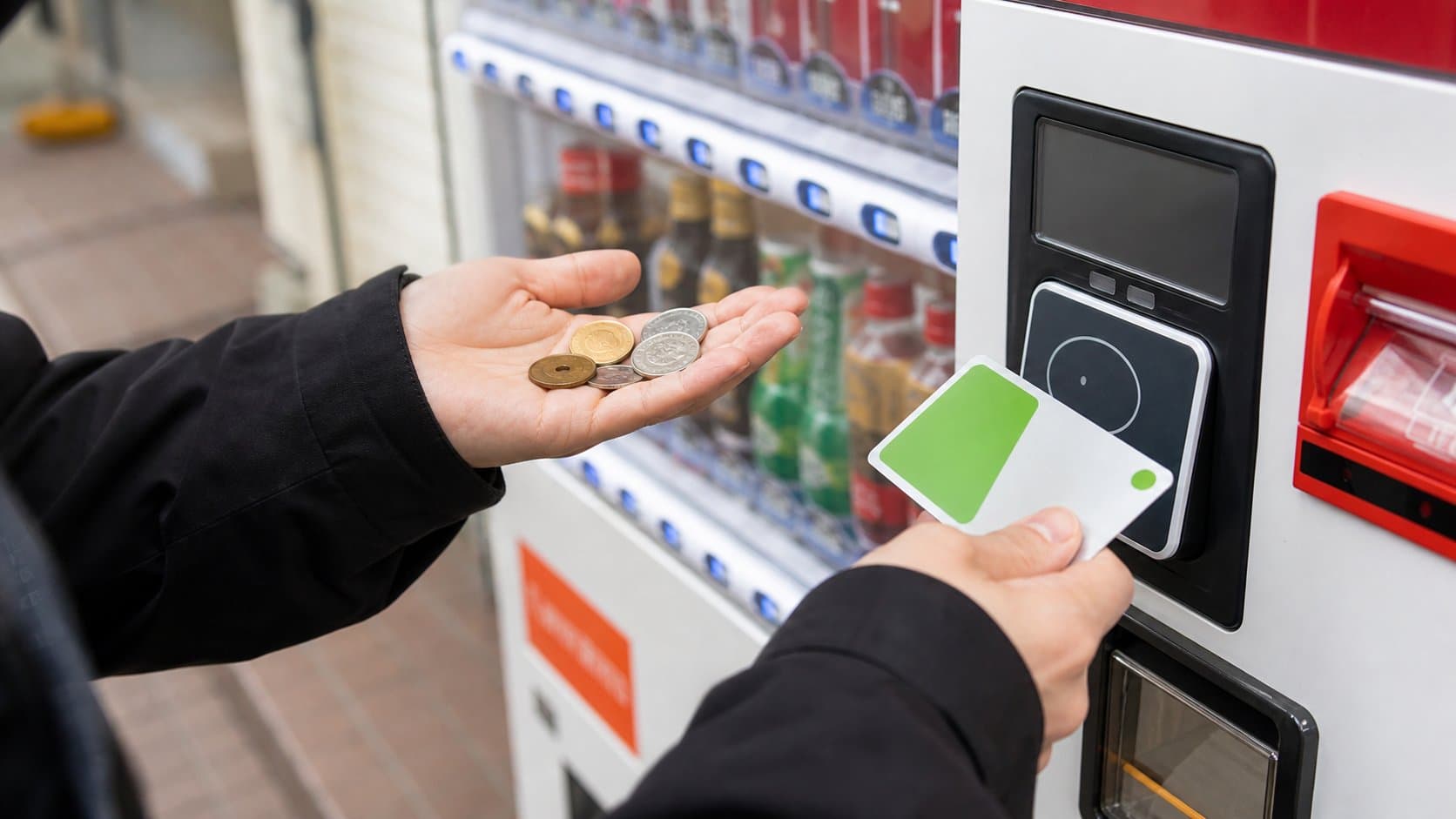
Cash is the broadest fallback; transit IC cards are often the fastest option only when the machine displays a compatible mark. Payment support belongs to the individual machine, so never infer it from the station, neighborhood or machine beside it.
What you will actually find
Cash slots show accepted denominations. IC-capable machines display Suica, PASMO or a nationwide mutual-use symbol. Some newer units accept bank cards or QR payments, but support varies by operator. JR East confirms that Welcome Suica can be used for shopping at compatible vending machines and that a purchase cannot be split between the card balance and cash.
Practical advice
Keep several coins and a clean ¥1,000 note. For cash, insert supported money and press a lit item. For IC payment, follow the screen order, select one item, hold one card still and wait for confirmation. Check the product, change tray and card balance before leaving.
When cash is the better choice
Use cash when no electronic-payment logo appears, your IC balance is uncertain or a remote machine has a simple coin mechanism. Check the denomination diagram first; valid Japanese money can still be rejected by hardware that does not support that note or coin design.
When an IC card is better
Use a transit IC card for speed when the supported mark appears and one card has enough balance. Keep the card or phone steady until the sound or message confirms payment. Avoid presenting a wallet containing several contactless cards.
What international visitors should not assume
A foreign contactless bank card or phone wallet may fail even when the reader looks familiar. QR apps can require a Japanese account or network connection. Carry cash rather than repeating an unsupported attempt, and never force a note into the validator.
Choose payment in five seconds
- Look for the exact supported logo.
- Check that one method covers the full price.
- Use one card, phone or cash input at a time.
- Wait for confirmation before tapping again.
- Collect the item and any change or returned payment.
Continue planning
What not to assume
A foreign phone wallet may not work even when a physical Japanese IC card does. Acceptance changes by machine, and a valid coin or note may still be unsupported by older hardware.
Sources and verification
- JR East Welcome Suica shopping guide
- JR East Suica e-money guide
- Bank of Japan notes and coins currently issued
Research status: reviewed July 13, 2026. Prices, products and installations can change; the live machine and operator are authoritative.
Practical questions
Frequently asked questions
Do all Japanese vending machines accept Suica or PASMO?+
No. A machine must display a compatible transit IC or mutual-use mark. A card that works at a railway gate is not automatically accepted by every vending machine.
Can I split a vending-machine payment between cash and an IC card?+
Usually not. Ensure that one payment method covers the full price before selecting. JR East specifically notes that Welcome Suica purchases cannot be split between the card balance and cash.
Which banknote is the safest cash fallback?+
A clean ¥1,000 note is the most useful note to carry for small purchases, but acceptance still depends on the icons printed on the machine. Larger notes are commonly unsuitable for ordinary drink machines.
Why was my valid coin or note rejected?+
The validator may not support that denomination or design, or the money may be bent, wet, damaged or inserted incorrectly. Retrieve it, check the accepted-currency diagram and try another supported payment method once.
Continue planning your Japan trip
Build a complete Tokyo itinerary
Use this vending-culture stop as part of a fuller trip. Our in-depth Tokyo guide includes a realistic regional route, seasonal advice, transport planning, local food picks, official sources and licensed photography.
Help improve this field guide
Seen a machine we should verify?
Share a dated observation, current products, price, map pin or correction. The editorial team reviews evidence before updating the public database.
About the author
Japan Vending Guide Editorial Team
Our English-language editorial team documents Japan’s vending culture using cautious sourcing and location verification. Unverified details remain clearly marked.
Read our editorial policy →